Skip navigation |

Our Manifesto

Our vision is of communities and individuals flourishing through music making. This manifesto is intended to show how that vision can be realised in the context of music & wellbeing.

Last modified on: 01/02/2012

‘Clinical evidence now supports what we've known for a long time: music is fantastically beneficial for people's health. This is the start of something really exciting, and music groups around the country can all play a part in it!’

- Lord Winston, September 2011

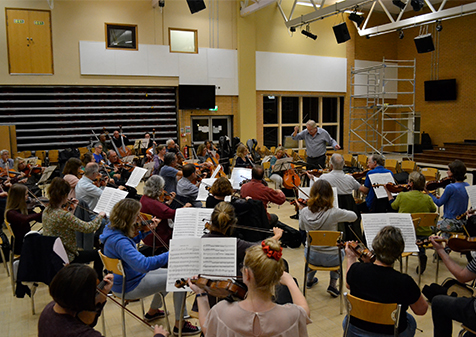
Conference Credit Nick McGowan LoweAs the UK’s number one organisation for voluntary music, we feel passionately that the more music people make together, the healthier and happier we all are. That goes for the youth of today as well as for the older amongst us.

In a climate where the cost of medical practice is increasingly difficult to sustain, there is growing evidence to show that music making can have a beneficial influence on the wellbeing of individuals and communities, and indeed can address a number of health areas that the National Health Service has traditionally been reluctant to approach, such as low self-worth and social exclusion. How can Making Music help harness and promote that beneficial effect?

Our vision for music and wellbeing

We intend to deploy an appreciable portion of our resources to advancing the cause of enhancing wellbeing through amateur music making. Accordingly our vision for music and wellbeing is of:

'A society which understands the importance of participatory music making in enhancing people’s lives, and where the full potential of amateur and voluntary music making can be deployed in a variety of contexts to enhance the health and wellbeing of both individuals and communities.'

How will we help realise this vision?

We will:

  • Identify a range of interventions which can use the resource of amateur music makers to promote health and wellbeing, based on available research;
  • Examine, and if possible address, the evaluation and evidential issues associated with proving the benefits of such interventions;
  • Undertake specific programmes, especially with member goups, to deliver effective interventions;
  • Evaluate the impact of such interventions to improve future programmes;
  • Actively promote and champion the benefits of music making on wellbeing.

We will achieve this by:

  • Mapping existing activity within the amateur music sector;
  • Participating in the National Initiative on Music and Health to examine the issues of evaluation and evidence;
  • Running an internal steering group incorporating external expertise to identify specific programmes;
  • Acquiring funding for specific programmes and/or developing programmes which are self-funding;
  • Ensuring that credible evaluation is built into each programme;
  • Conducting campaigns to our membership and the wider public and lobbying external agencies to promote the benefits of music making on individual and community wellbeing.

Programme threads

As of autumn 2011, we are looking at the following seven areas in which to develop programmes:

Community choirs

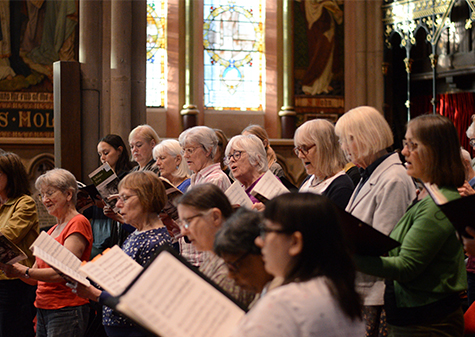
We would like to develop a range of community choirs around the UK to enhance community cohesion. Our Vocalityprogramme, in partnership with Sound Sense,is already funded in certain areas of England and funding is being sought to extend it to additional areas – and it also offers potential for a self-sustaining franchise.

Wellbeing choirs

Wellbeing choirs are set up to support the specific health issues of patient groups, whether these are mental or physical. Examples already exist around the country and it is our intention to replicate these and research the need for others.

Workplace choirs

It is our intention to offer a consultancy service to organisations looking to set up workplace choirs, especially in the public sector.

Older people living independently

We intend to identify programmes to support the wellbeing of older people in their homes and in day care centres – perhaps using singing as a vehicle.

Older people in residential care

A number of pilot projects to enhance the quality of life of older people in residential care, primarily through supporting singing, are being considered for evaluation.

People with Chronic Obstructive Pulmonary Disorder (COPD)

There is a growing body of evidence that some of the effects of COPD can be mitigated through effective use of singing techniques. We intend to explore this further and establish, if possible, a range of programmes using member groups to support singing activities.

Music in clinical settings

We are starting to investigate the possibilities of working with member groups to undertake residencies in hospitals, in both singing and instrumental activities.