
What the national curriculum review means for music education
Making Music was one of 7,000+ respondents to the 2024 school curriculum consultation. The national curriculum review has now reported and the government responded - we’ve looked through both documents to let you know what the proposed changes mean for music groups and music education.
Firstly, the English Baccalaureate (Ebacc) measure of evaluating schools will be abolished; the Ebacc rewarded schools for pupil achievement in a specific set of GCSE subjects, including English, maths, sciences, languages, history or geography. It did not include arts subjects and had been felt by many to be instrumental in the 40% decline of take-up of arts subjects at GCSE and A-level since 2010. The other assessment measure, Progress 8, will now be reformed and focussed on instead.
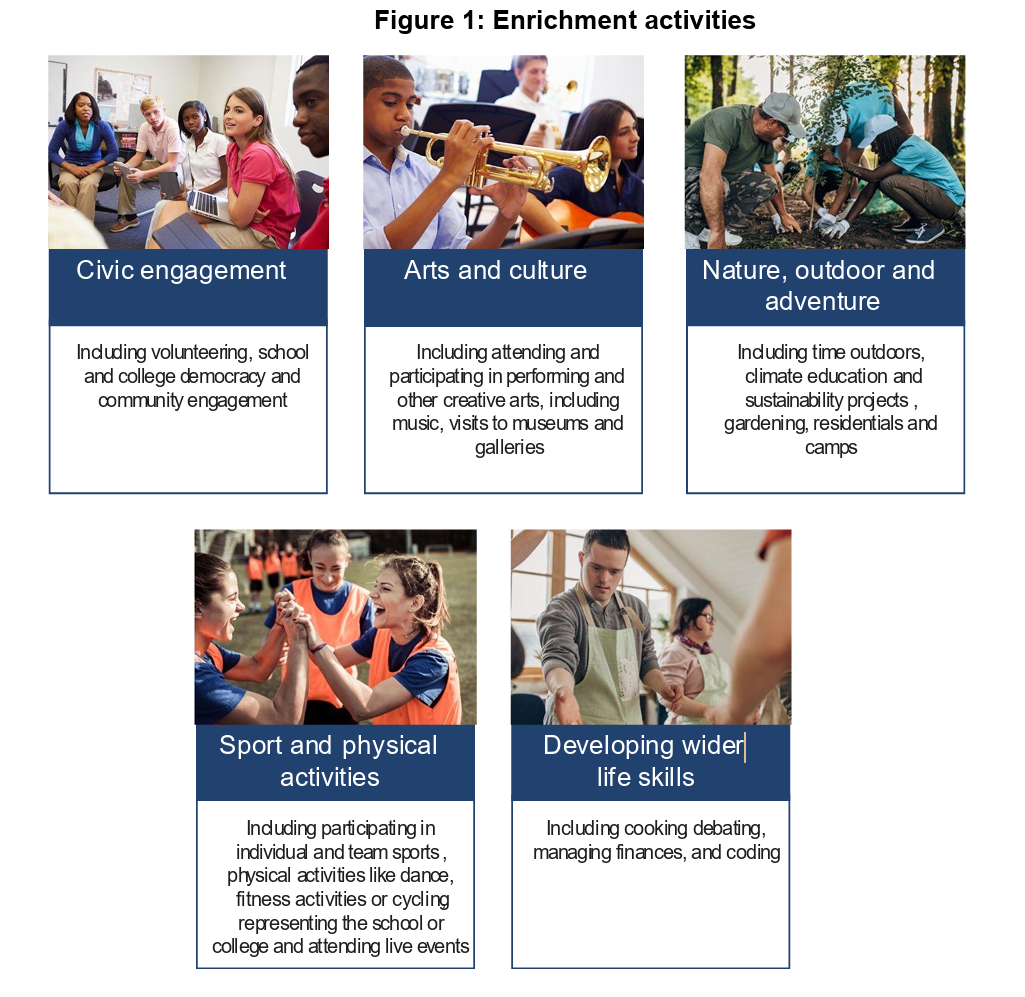
We also see an increased emphasis that the National Curriculum is not supposed to form the entirety of a school day, and schools will be expected to provide non-curricular subjects and extra-curricular enrichment opportunities (including music), for which they will be held to account by Ofsted.
Regarding music education, the report’s recommendation reads::
‘…without robust foundations having been being built by the end of Key Stage 3, GCSE Music becomes inaccessible to most students unless they have external or extra-curricular tuition. We therefore recommend specifying the core knowledge and skills that should be taught in Music from Key Stages 1 to 3 to create a better sequenced and more equitable curriculum.’ (p. 99)
‘…We therefore recommend that the Government explores ways to better optimise its investment in Music education to support the teaching and learning of musical instruments and the reading of music to ensure equitable access to and progression in Music education.’ (p. 97)
The Government’s response was as follows:
- ‘We will revitalise arts education as part of the reformed national curriculum’ (p. 9)
- 'Provide an enrichment entitlement for every child, to ensure broad opportunities, within and beyond the curriculum, during and after the school day.’ (p. 11)
- 'We recognise the … concerns around access to music and that some schools require support to deliver music well, including from specialist teachers, particularly to help pupils to develop their knowledge and skills in learning to read music and play instruments.’ (p. 35)
- ‘Evidence shows that extra-curricular enrichment participation is associated with higher educational achievement and positive outcomes in adulthood … but the enrichment offer varies significantly from school to school. Around one-third of secondary school children said they did not participate in any activities in the 2024/25 autumn term. This was higher for pupils eligible for free school meals compared to those who were not (35% vs 25%).’ (p.38)
- ‘… differences in access and participation demonstrate why these subjects and opportunities must be embedded within the school curriculum as well as extracurricular activities.’ (p. 9)
- ‘… we will provide information on schools’ enrichment opportunities in the new School Profiles… We will consult on how enrichment is embedded in School Profiles, ensuring they are codesigned with the input of schools ...’ (p. 40)
We see opportunities for music groups to become schools’ local partners, and that more young people will in future have access at school to the foundations which will enable them to enjoy life-long music-participation in leisure-time groups.
Initial teacher training bursaries
The need for specialist and high-quality teaching is mentioned throughout the curriculum review, including specifically in the sections on music. However, the Department of Education has just abolished the training bursaries which had been available to music teacher trainees (as theirs is a subject experiencing a shortage of applicants).
The Singing Network UK (SNUK), which Making Music both chairs and comprises 30+ organisations representing singing, has now written to the Secretary of State for Education, Bridget Phillipson, pointing out that the DfE has missed its own music teacher recruitment targets for secondary music teachers in 11 out of the last 12 years, urging her to reinstate these bursaries.
We will continue to follow the Government’s next steps and share updates as more detail emerges on the reformed national curriculum and the new School Profiles.
For more on music education, read through the response to our survey on what impact learning music in school has on professional life.
